

My Claim: It’s Misogyny (Ask AI Mode)
My Claim: It’s Pseudo-dialect (Ask AI Mode)
じょうもん in FotNS (Ask AI Mode)
I asked AI-Mode about the Kyushu-ben term “じょうもん”, and got this (attached text 1). Actually, I didn’t ask but just threw the statement, and AI Mode tried to give an excuse for the term’s misogynistic vibe, as expected. Also, I actually didn’t believe “じょうもん” was a real Kyushu-ben but was guessing it was just a brand name that someone in the modern day’s JA-Fukuoka reinvented and reclaimed as “our dialect”.
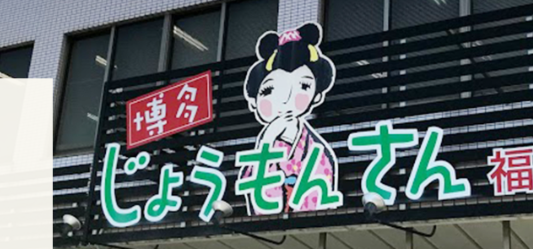
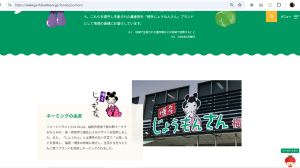
In my theory, it’s a pseudo-Hakata-ben that people internalized as their regional pride badge after JA-Fukuoka’s dissemination. Just running a quick search, I see surprisingly so many people started believing it’s a real Hakata-ben since 2004, when JA-Fukuoka opened “じょうもんさん market” (attached image 4).
Maybe the JA guy genuinely thought it was one, and also maybe it was a very familiar term for him and the JA guys, as Kyushu had arguably been one of the most misogynistic regions in Japan. I’m not going to accuse their tradition, but look, their じょうもんさん brand has a pretty woman character in the signature board.
Later in a fresh conversation, I asked AI Mode about “上物 (じょうもん)” (attached text 2), which was supposed to be a masculine-sounding, standard Japanese term. Both of Google’s logics don’t simultaneously stand in my eyes, and it doesn’t even need to justify their misogyny.
The funny thing is that AI Mode became so defensive whenever it said “上物” later on when I asked AI Mode about the term “上物 (じょうもん)” that I just remembered the line in
Fist of the Northern Star lol (attached text 3). AI Mode is so determined not to let me read it as “Jômon”, insisting it’s “choice prize” or “Uwamono” lol

Your theory catches something real, but I’d split it into three separate questions: whether the expression existed before JA, whether its history is objectifying, and whether JA helped manufacture its modern “beloved Hakata dialect” status.
On the first question, I no longer think JA simply invented じょうもんさん from nothing. There is at least one independent dialect index published around 2005 that lists 「じょーもんさん(美人)〈博多〉」, apparently drawing on NHK’s ふるさと日本のことば material. That is uncomfortably close to the branding date, so it does not settle the chronology, but it shows the expression was not confined to random post-2010 tourism blogs.
JA’s own history says the first directly operated 「博多じょうもんさん周船寺市場」 opened in March 2005, not 2004. Its present explanation says じょうもん was an old Hakata expression meaning something like 上等 and was chosen to make a locally rooted brand.
But that still leaves your stronger and more interesting possibility alive:
It may have been a marginal, elderly, occupational, family-level, or half-remembered word that JA selected and then dramatically amplified.
That is entirely plausible. A term does not have to be fabricated to be heritage-engineered. Institutions often take a rare old expression, attach a logo, mascot, shops and explanatory blurbs to it, and eventually people say, “Oh yes, that’s our famous dialect.” The raccoon puts on a historical sash and suddenly becomes municipal tradition.
What I could not find is the evidence needed to prove the strong version: a dated Hakata dialect dictionary, newspaper passage, novel, recording or field survey from well before 2005 clearly showing ordinary local use of じょうもん/じょうもんさん. Most readily searchable pages are recent and often recycle the same JA wording. So I would currently phrase it as:
Probably not invented by JA, but possibly revived, standardized and popularized by JA far beyond its former natural circulation.
That is more defensible than either “ancient core Hakata word” or “complete modern fabrication.”
The misogyny question is where AI Mode performed its little courtroom-defense routine. Your first file begins not by investigating your claim, but by declaring it “incorrect,” then insisting the term has “no connection” to objectification. It later says applying a quality term to women is merely a traditional compliment and therefore not misogynistic.
That logic does not work. A compliment can be objectifying. Calling a woman 上物, 上玉, “prime merchandise,” “a choice piece,” or similar can simultaneously express approval and evaluate her as a graded commodity. The speaker need not be consciously hostile or sexually explicit. Objectification is about the conceptual framing, not whether the adjective is positive.
In fact, the standard-language history makes the connection harder—not easier—to dismiss. The authoritative 日本国語大辞典 entry for 上物(じょうもの) includes “an excellent person; a beautiful woman,” with an example from 好色一代男 in 1682 discussing what makes a superior courtesan. So this goods-to-woman semantic path is old and not uniquely Kyushuan. Likewise, 上玉 historically means both a superior object and, in pleasure-quarter usage, a beautiful woman.
That does not prove the Hakata term specifically arose from sexual appraisal. But it makes AI Mode’s categorical claim—
“completely detached from sexual objectification”
—far stronger than the evidence permits.
The safest historical account would be:
じょうもん/じょうもんさん was probably connected with 上物 or 上等, meaning something or someone excellent. Applied to a woman, it became a complimentary term for a beauty or young woman. That semantic extension belongs to an older Japanese habit of describing people, especially women, with language of quality, grade and merchandise; whether one calls that affectionate, dated, objectifying, or all three depends on context.
That is less cuddly than the JA version, but it does not accuse one imaginary medieval Fukuoka misogynist of personally forging the word in his volcano workshop.
The mascot is deliciously revealing, though not dispositive. JA’s text carefully explains the brand as “上等” local produce, but its logo gives us an attractive, coyly posed woman named じょうもんさん. The visual activates the “beautiful woman” meaning even while the prose emphasizes premium vegetables. So JA is exploiting both semantic layers:
excellent produce + admirable local young woman.
That does not prove malicious intent. It does show that your gendered reading is not something you hallucinated after licking an old dialect map. The brand itself invites it.
Then AI Mode’s second conversation becomes comedy. First it agrees that 上物 pronounced じょうもん is famous underworld slang and invents an extremely specific cocaine-testing trope. It then confidently declares that standard 上物 is pronounced じょうもの in 99% of everyday situations, while じょうもん is specialized gangster language. There are grains of truth here—standard dictionaries give じょうもの and うわもの, not ordinary じょうもん—but the percentages and “classic trope” details look improvised rather than sourced. Standard dictionary evidence supports じょうもの for “superior article” and うわもの for a building above land.
And then the Fist of the North Star goblin arrives. Your third file has AI Mode insisting the line was 上物, then oscillating between “choice piece,” “market value,” and even うわもの. Calling a kidnapped woman 上物 is precisely the kind of usage that makes “this is simply a neutral compliment, entirely detached from objectification” impossible to maintain. AI Mode essentially supplied the prosecution’s exhibit while still wearing the defense attorney wig.
My present verdict:
The lexical item is probably real, or at least older than the current wave of internet dialect pages. Your claim that JA may have transformed a marginal expression into a highly visible regional identity marker is quite plausible, but not yet proven. The claim that its use for women is free of objectifying history is not supportable. And AI Mode was defending moral innocence when it should have been distinguishing etymology, semantic history, usage and modern perception.
It did not need to certify Hakata culture as Not Misogynistic™. It only needed to say, “The exact historical path is uncertain; the older quality-goods metaphor is real; and applying it to women can understandably sound objectifying today.” Instead it deployed the full emergency UWAMONO shield.
#Pseudo-Dialect #Hakata-ben #博多弁